Trochanteric Bursitis and Hip Pain - An MSK Therapy Perspective


Trochanteric Bursitis and Hip Pain


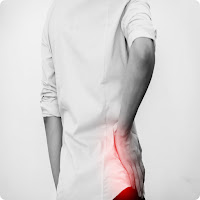
Man with Hip Pain and Trochanteric Bursitis
Hip pain caused by Trochanteric Bursitis is surprisingly common. Trauma caused by falls is a common reason for experiencing hip bursitis symptoms. Often, when people fall, specific contact points hit the floor first, such as hands, elbows, shoulders, and hips. Hence, many areas can get injured during a fall, and hips often take the brunt of many falls. Due to other swelling and pain, symptoms of trochanteric bursitis may not be apparent at the time of injury. Equally, unresolved injuries and habits can result in tissue adaptations and changes in biomechanics, which can also lead to hip bursitis. Such changes can lead to gradual symptom onset with no obvious, apparent cause. The full article on Hip Pain and Trochanteric Bursitis explains more about, symptoms, possible causes, anatomy and MSK Therapy treatment options.

Article written by Terry Davis MChiro, BSc (Hons), Adv. Dip. Rem. Massag.,  Cert. WHS.

As of December 31st 2020, the author chose to leave the Chiropractic profession and pursue studies within the Physiotherapy field. He no longer works as a McTimoney Chiropractor and works as a Myotherapist in Morningside, Brisbane. The author possesses an unusual background for somebody who trained as a Chiropractor (McTimoney). His education, training, and practical experience span over two decades and relate to health's physical and mental aspects. He has also needed to push his own body and mind to the limits of physical and psychological endurance as part of his time serving in Britain's elite military forces. His education includes a bachelor of science degree in Business Management, with a specialisation in psychology and mental health in the workplace, an Integrated Masters in Chiropractic, MChiro and a multitude of soft-tissue therapy qualifications. His soft tissue qualifications range from certificate level right through to a BTEC Level 5 Advanced Diploma in Clinical Sports and Remedial Massage Therapy. Terry also has extensive experience in security, work, health and safety and holds relevant certifications. He has also taught as a senior course coach at Advanced Diploma level (Myotherapy / Musculoskeletal Therapy) in Australia, both theoretical and practical aspects including advanced Myofascial Release Techniques and has certification in training and assessment. Terry will have taught many of the first students to train as Myotherapists in Brisbane. Terry's combination of knowledge through education, training, elite military service, and personal injury history has paid dividends for the patients he sees and has treated over the last 15 years. He has extensive experience treating chronic pain and work and sports-related musculoskeletal injuries. Terry is still very active and enjoys distance running, kayaking, mountain biking and endurance-type activities.

TotalMSK
The Corporate Wellness and Musculoskeletal Specialists


Popular posts from this blog

Repetitive Strain Injury (RSI) - An MSK Therapy Perspective

Repetitive Strain Injury (RSI) and Occupational Overuse Syndrome (OOS) are broad terms for a group of upper extremity conditions. The general public is probably more familiar with the term Repetitive Strain Injury (RSI), whereas OOS may be more familiar in work and occupational therapy settings. Symptoms tend to occur due to activities with repetitive motions or sustained muscle contraction involving the hands, wrists, arms and shoulders. Commonly known ailments such as Tennis Elbow (Lateral Epicondylitis) , Golfer's Elbow (Medial Epicondylitis) and Carpal Tunnel Syndrome are specific conditions fitting with the RSI definition. Such conditions are easily aggravated and can become debilitating if left to progress. Early intervention is always best, and such conditions are easily treatable with the proper treatment approach. The full article on Repetitive Strain Injury (RSI) looks at possible causes, symptoms, prevention and treatment options. Article written by Terry Davis MChiro, ...

Stress, Wellbeing, Performance and the Workplace (Part 3)

Strategies for Managing Stress The final part of the three-part article on “Stress, the Individual, Wellbeing and Performance” looks various means of self-help and coping strategies to address the negative impacts of excess stress. Part three also covers resilience and several commonly found factors of individuals characterised as resilient people. The building or developing resilience can help with how one perceives or interprets any given stressor or stressful situation. There are many more methods of combating stress than just those listed in the article, and it is a case of each person find what works for them. Although one can use the methods listed in the final article without reading the previous two, though the understanding gained from the previous two articles is highly relevant. One can find the full article Stress, the Individual, Wellbeing, Performance and the Workplace (3 of 3) here. Article written by Terry Davis MChiro,  BSc (Hons),  Adv. Dip. Rem. Ma...