
Bursitis pain, symptoms, causes, treatment - A Brisbane Myotherpists Perspective

Bursitis Pain Treatment
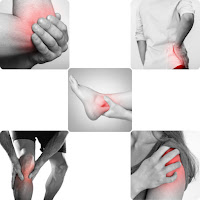

Bursitis Pain affecting joints
Bursitis is an MSK condition involving the inflammation of a bursa and named after the involved bursa, such as Trochanteric Bursitis affecting the hip. Bursae exist throughout the body and near joint structures and cushion or reduce the friction between tissues and structures during movement. There are many reasons why a bursa and the surrounding tissues can become inflamed and painful. Once inflamed, it is easy to irritate tissues further, leading to more inflammation, pain and restricted movement. Besides the hip, Subacromial Bursitis of the shoulder is extremely common. Bursitis can resolve quickly enough with the right MSK treatment strategy, though it can easily become chronic if left. The full article about Bursitis pain explains more about the anatomy, possible causes, symptoms and treatment options. Bursitis Pain - an MSK Therapy Perspective.

The information on this page was written by Terry Davis MChiro, GradCertMentHlth, BSc. (Hons), Adv. Dip. Rem. Massag., Cert. WHS.


TotalMSK Clinic Brisbane
Ethical MSK Therapy Clinic and Myofascial Release Specialist

Popular posts from this blog

Repetitive Strain Injury (RSI) - A Brisbane Myotherpists Perspective

Repetitive Strain Injury (RSI) and Occupational Overuse Syndrome (OOS) are broad terms for a group of upper extremity conditions. The general public is probably more familiar with the term Repetitive Strain Injury (RSI), whereas OOS may be more familiar in work and occupational therapy settings. Symptoms tend to occur due to activities with repetitive motions or sustained muscle contraction involving the hands, wrists, arms and shoulders. Commonly known ailments such as Tennis Elbow (Lateral Epicondylitis) , Golfer's Elbow (Medial Epicondylitis) and Carpal Tunnel Syndrome are specific conditions fitting with the RSI definition. Such conditions are easily aggravated and can become debilitating if left to progress. Early intervention is always best, and such conditions are easily treatable with the proper treatment approach. The full article on Repetitive Strain Injury (RSI) looks at possible causes, symptoms, prevention and treatment options. The information on this page was writte...

Trochanteric Bursitis and Hip Pain - A Brisbane Myotherpists Perspective

  Trochanteric Bursitis and Hip Pain Hip pain caused by Trochanteric Bursitis is surprisingly common. Trauma caused by falls is a common reason for experiencing hip bursitis symptoms. Often, when people fall, specific contact points hit the floor first, such as hands, elbows, shoulders, and hips. Hence, many areas can get injured during a fall, and hips often take the brunt of many falls. Due to other swelling and pain, symptoms of trochanteric bursitis may not be apparent at the time of injury. Equally, unresolved injuries and habits can result in tissue adaptations and changes in biomechanics, which can also lead to hip bursitis. Such changes can lead to gradual symptom onset with no obvious, apparent cause. The full article on  Hip Pain and Trochanteric Bursitis  explains more about, symptoms, possible causes, anatomy and MSK Therapy treatment options. The information on this page was written by Terry Davis MChiro, GradCertMentHlth, BSc. (Hons), Adv. Dip. Rem. M...

Unlocking Myofascial Release: Benefits and Techniques Explained

Understanding Myofascial Release: What It Is? Myofascial release (MFR) is a specialized form of manual therapy that focuses on relieving tension and pain within the myofascial tissues of the body. These tissues, form part of a complex web of connective tissues, which run throughout the entire body and support muscles, bones, nerves, and organs. When these tissues become tight or restricted due to injury, stress, or inflammation, they can cause widespread pain and discomfort. Myofascial release aims to gently loosen and stretch these tissues to restore normal movement and alleviate pain. The practice of myofascial release involves the application of sustained pressure to the myofascial tissues by a trained therapist. This pressure helps to release adhesions, or areas where the fascia has become stuck and immobile. As the fascia is released, blood flow and circulation are improved, leading to better oxygenation and nutrient delivery to the affected areas. This process not only reduces pa...